
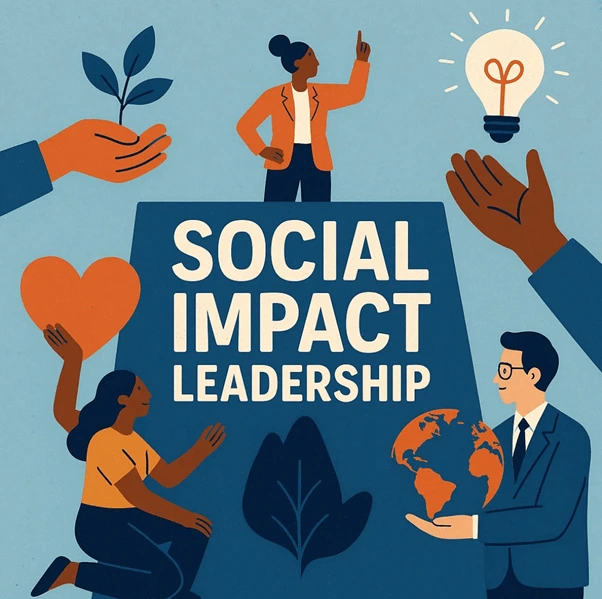
In today’s purpose-driven economy, businesses are no longer judged solely on profits, products, or market share. Customers, investors, employees, and partners increasingly expect organizations to play a meaningful role in solving social and environmental challenges. This shift has redefined success: companies that balance commercial growth with positive societal impact are building stronger reputations, deeper trust, and long-term resilience.
Social responsibility is no longer a “nice-to-have” or a side project managed under a traditional CSR banner. It has become a strategic business function that influences brand perception, customer loyalty, and even financial performance. The question is no longer whether businesses should do social good, but how they can do it authentically, effectively, and sustainably.
The Evolution from CSR to Responsible Business
Historically, corporate social responsibility was often limited to donations, sponsorships, or one-off charity campaigns. While generosity still matters, stakeholders today look for deeper alignment between a company’s values, operations, and impact.
Modern responsibility focuses on integration rather than isolation. Social good is embedded into core business decisions such as hiring practices, supply chains, product design, marketing, and partnerships. This evolution reflects a broader understanding: responsible behavior reduces risk, attracts top talent, and strengthens brand equity.
Businesses that embrace this mindset move from reactive philanthropy to proactive impact. They don’t ask, “How much can we donate?” but instead ask, “How can our business model itself contribute to positive change?”
Why Reputation and Responsibility Are Now Interlinked
Reputation has become one of the most valuable intangible assets a company owns. In the digital age, transparency is unavoidable. Consumers can quickly research a brand’s ethics, workplace culture, and social stance. Negative practices spread rapidly, while positive impact stories earn organic advocacy.
Responsible businesses benefit in several key ways:
- Customer trust: Consumers prefer brands that align with their values and demonstrate accountability.
- Employee engagement: People want to work for organizations that stand for something meaningful.
- Investor confidence: ESG-focused investors increasingly favor companies with measurable social impact.
- Market differentiation: Purpose-driven brands stand out in competitive industries.
Responsibility is no longer separate from reputation—it actively shapes it.
Doing Social Good Without Being Promotional
One of the biggest challenges for companies is contributing to social good without appearing self-serving or promotional. Authenticity is critical. Audiences are quick to identify “impact washing,” where social causes are used primarily for marketing optics rather than real change.
To avoid this, businesses should focus on:
- Long-term commitment: Sustainable impact requires consistency, not one-off campaigns.
- Measurable outcomes: Clear goals and transparent reporting build credibility.
- Community involvement: Listening to affected communities ensures relevance and effectiveness.
- Alignment with expertise: Social initiatives should connect naturally to what the business does best.
When social responsibility is treated as a shared mission rather than a branding tool, communication becomes more credible and engaging.
Strategic Partnerships That Drive Impact
Many organizations struggle to design and implement effective social initiatives on their own. This is where collaboration becomes essential. Partnering with experts who understand both social challenges and business realities allows companies to maximize impact while staying aligned with strategic goals.
A specialized social impact agency can help bridge this gap by guiding businesses through responsible strategy development, impact measurement, stakeholder engagement, and ethical storytelling. These partnerships enable companies to move beyond symbolic gestures and toward meaningful, scalable change.
Rather than outsourcing responsibility, such collaborations strengthen internal capabilities while ensuring that social good efforts are informed, accountable, and effective.
Key Areas Where Businesses Can Create Social Value
Every organization, regardless of size or industry, has opportunities to contribute positively. Some of the most impactful areas include:
1. Inclusive Employment Practices
Creating equitable hiring, retention, and growth opportunities builds stronger teams while addressing social inequality. Diversity, equity, and inclusion are not just moral imperatives—they improve innovation and decision-making.
2. Ethical Supply Chains
Responsible sourcing, fair labor practices, and environmental stewardship reduce risk and build trust across the value chain.
3. Sustainable Products and Services
Designing offerings that reduce harm or actively benefit society creates shared value for customers and communities.
4. Community Investment
Supporting education, health, skill development, and local entrepreneurship helps communities thrive while strengthening a company’s social license to operate.
5. Responsible Governance and Transparency
Clear reporting, ethical leadership, and accountability frameworks demonstrate seriousness and integrity.
Measuring Impact Without Losing the Human Story
One common misconception is that social impact is too complex to measure. While it’s true that not every outcome fits neatly into a spreadsheet, businesses must still track progress to ensure effectiveness.
The key is balancing quantitative metrics (such as participation rates, cost savings, or reduced emissions) with qualitative insights (such as employee satisfaction, community feedback, and lived experiences). Together, these elements create a fuller picture of impact.
Measurement should not be about perfection—it should be about learning, improving, and staying accountable.
Social Good as a Competitive Advantage
Companies that integrate responsibility into their core operations are better equipped for the future. Regulations are tightening, consumer expectations are rising, and talent is becoming more values-driven. Businesses that act early gain adaptability and credibility that competitors struggle to replicate later.
Responsible practices also foster innovation. When organizations design with people and planet in mind, they uncover new markets, improve efficiency, and build solutions that are resilient over time.
In this sense, social good is not a cost—it is an investment in long-term relevance.
Conclusion: Responsibility Is the New Standard
The most respected businesses of tomorrow will be those that understand a simple truth: success and social good are not opposing forces. When responsibility is embedded into strategy, culture, and operations, it strengthens reputation and drives sustainable growth.
Doing social good doesn’t require grand gestures. It requires intention, consistency, and a willingness to align profit with purpose. By acting responsibly today, businesses not only contribute to a better society—they build brands that people trust, support, and want to be part of for years to come.