
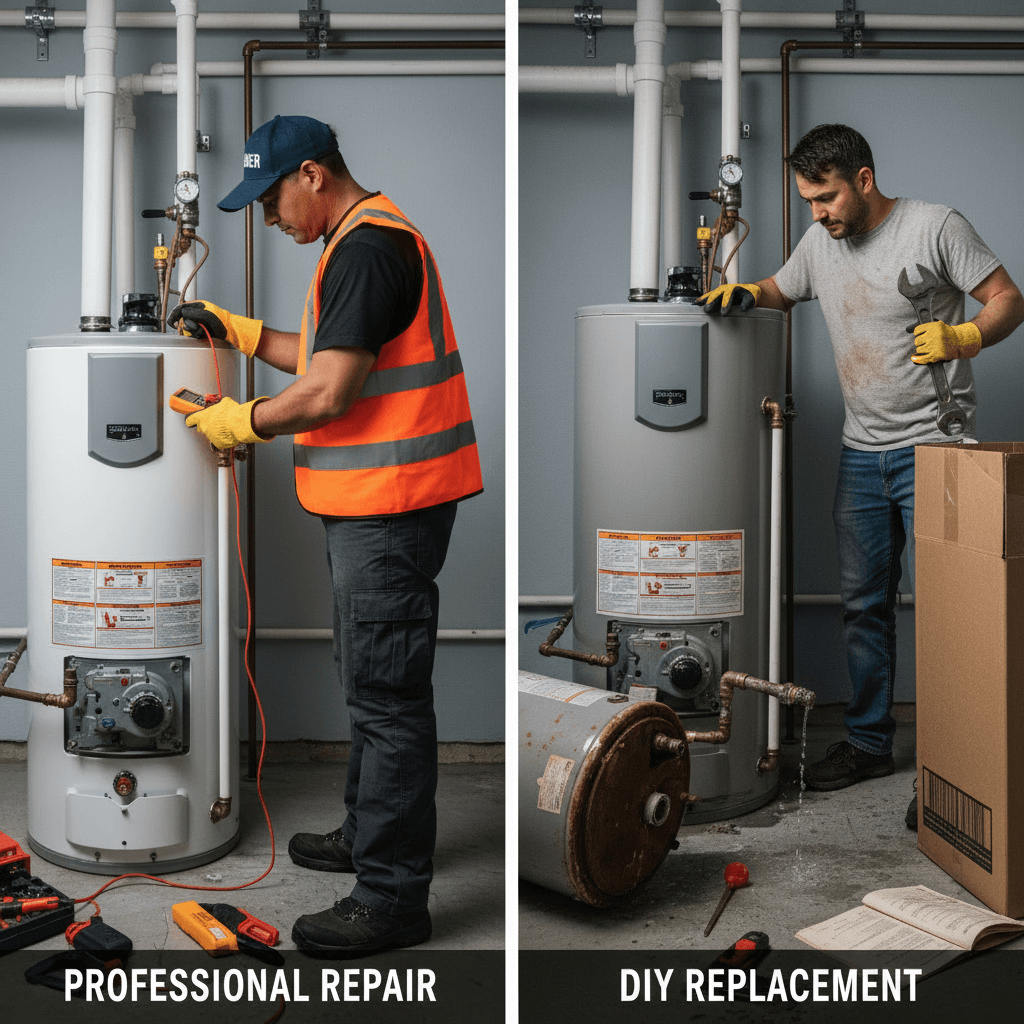
When your water heater starts to malfunction, you’re faced with a critical decision: should you attempt a DIY replacement or hire a professional for repairs? The cost implications of both choices can significantly impact your household budget and ongoing expenses. Understanding the balance between upfront costs and long-term savings is crucial when dealing with water heater repair issues. Below, we’ll explore the financial aspects of DIY replacements versus professional repair services to help homeowners make informed decisions.
Assessing the True Cost of DIY Water Heater Replacement
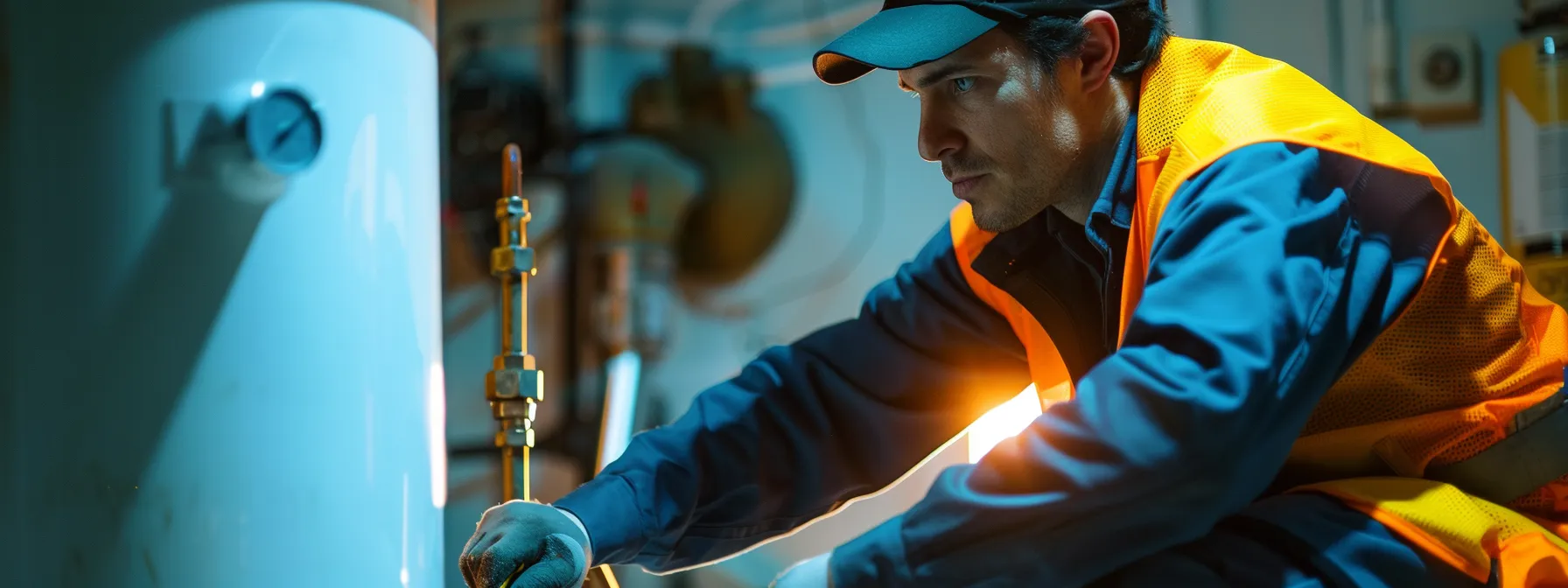
Taking on a DIY water heater replacement project can seem like a cost-effective solution initially. Many homeowners believe they can save money by avoiding professional service fees and relying solely on their own labor. However, the true cost of this approach needs careful consideration.
Aside from purchasing the new water heater, additional expenses may include tools, fittings, and potential upgrades to meet the latest building codes. Plus, if your current system is gas-powered, special considerations for safe handling and installation can add to the complexity and cost. There’s also the value of your time and the risk of mistakes that might necessitate further fixes.
For those considering a DIY approach, it is advisable to thoroughly evaluate all required tasks and associated costs. Check warranties and return policies before purchasing equipment, and ensure you’re aware of permit requirements and local code regulations to avoid costly oversights.
Professional Water Heater Repair: Evaluating the Investment
Hiring a professional to repair your water heater represents an investment in expertise and guarantees. Certified technicians offer the assurance of correct diagnosis and repair, quality workmanship, and typically, a warranty on their service. Understanding this value helps in assessing whether the cost is justified.
Professional repairs can range from simple fixes to complex issues, and the prices reflect this variability. A reputable company might charge more upfront, but they bring longevity and peace of mind. Energy efficiency benefits may also accrue if the technician improves the system’s overall performance.
Before deciding, homeowners should compare multiple quotes and read reviews to find a reliable professional. Verify their credentials, ask about warranties, and consider the potential savings from a repair that extends the water heater’s lifespan, delaying the need for a full replacement.
Hidden Expenses in Do-It-Yourself Projects
The allure of saving on labor costs with a DIY project is often overshadowed by unanticipated expenses. These hidden costs can include materials waste, tool acquisition, and correcting errors caused by inexperience. On face value, DIY might appear cheaper, but the reality can be quite the opposite.
Incorrect installation can lead to water damage or even safety hazards. Moreover, the time investment for troubleshooting and learning can be substantial. Some homeowners find that the money saved on labor is outweighed by the personal time sacrificed, which could have been spent earning money or with family.
When considering a DIY replacement, plan for contingencies and be honest about your skill level. Factor in the costs of possible do-overs, time management, and even insurance implications. Sometimes, these hidden expenses can diminish the perceived savings of tackling the project yourself.
Making the Right Choice: Cost Efficiency in the Long Run

The debate between DIY replacement and professional repair of a water heater is not just a matter of initial expense—it’s about evaluating long-term cost efficiency. While DIY can offer immediate savings, it does not always translate to better financial outcomes over time.
A professionally repaired or properly installed water heater is less likely to face recurrent issues, thus minimizing future repair costs. Additionally, technicians can offer advice on maintaining the unit for optimal performance. This proactive care can significantly extend the life of the appliance, leading to greater savings.
In making this decision, homeowners should project the total cost over the lifespan of the water heater, considering energy costs, maintenance, and potential system failures. Professional services might entail higher upfront costs, but the long-term savings from a reliable, efficient system can offset this initial outlay.
Overall, while a DIY water heater replacement can seem attractive for its immediate cost savings, the long-term financial benefits of professional repair often prevail. Homeowners must weigh the tangible costs against the hidden risks and potential future savings. Making an informed decision based on these factors will ensure not only cost savings but also safety and efficiency for years to come.